
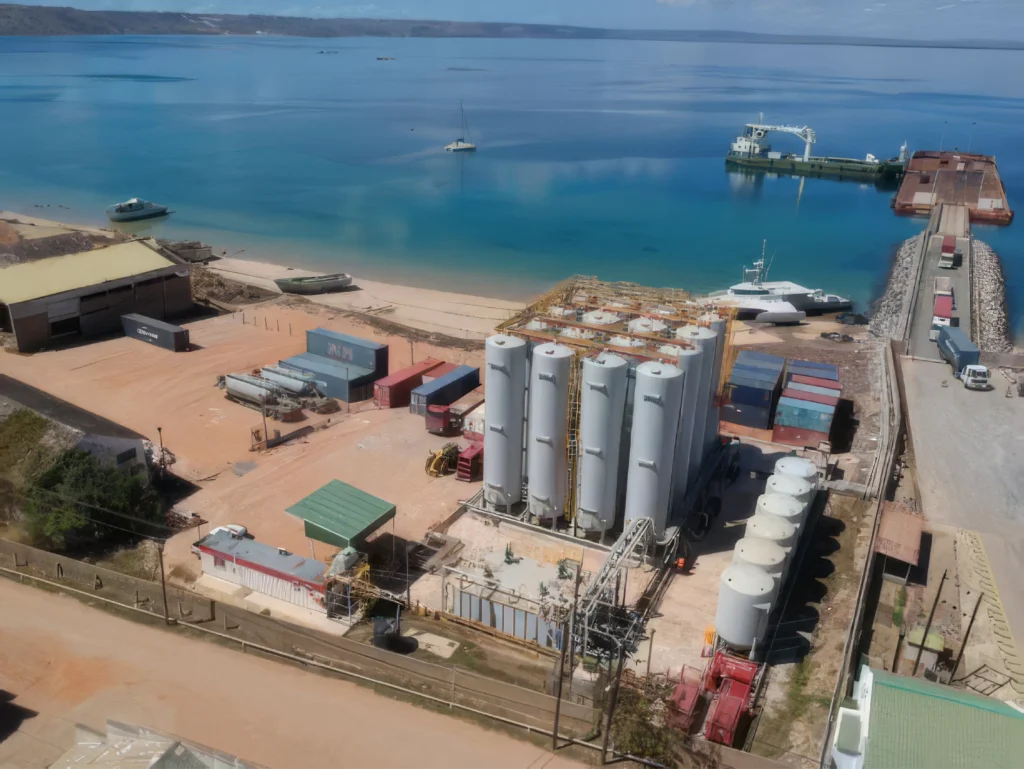
Even with completed plans and a clear schedule, delivering construction projects in remote parts of Africa requires careful coordination and contingency planning. Getting people, materials, and equipment to remote sites often involves overcoming limited infrastructure, long supply routes, and unpredictable conditions. Project delivery experience in Cabo Delgado, Northern Mozambique, illustrates a range of obstacles, from supply chain delays to adapting to local circumstances. Success depends not just on technical skills, but on strong logistics, appropriate workforce support, and effective risk management.
Remote Site Mobilisation
Mobilisation for remote projects involves much more than simply moving equipment and people to site. Contractors may need to set up access roads, accommodation, utilities, and fuel storage, along with medical and security arrangements. Appropriate workforce support is also critical. Without these, even straightforward projects become difficult to execute due to logistics and resource constraints. The extent of enabling works depends on existing infrastructure and project needs. Sometimes, just establishing the site is a major undertaking. Early planning should focus on real-world needs, not just the final build.
Logistics and Procurement
Distance affects every aspect of logistics and procurement in remote construction in Africa. At a remote site, obtaining a replacement part or critical material can take days due to supply chain and transport constraints. Delays with materials, fuel, personnel, or equipment can disrupt scheduled works and may require immediate adjustments to plans. Progress depends not only on construction activities but also on the timing of material arrivals, reliable transport, and border processes.
Effective delivery requires integrating logistics and construction planning from the outset. Procurement lead times, delivery schedules, and resource availability must correspond with the construction programme. Understanding delivery timelines, establishing alternative suppliers, and allowing for possible disruptions are all essential. Construction, procurement, and logistics should be managed as interconnected functions, as each directly impacts project progress.
Cheaper suppliers may deliver more slowly or less reliably. Insufficient critical spares can prolong equipment downtime, particularly when supply routes are disrupted. Without contingency planning for supplies and resources, remote projects are vulnerable to significant delays and operational disruption. Maintaining backup suppliers, critical spares, and realistic programme allowances is important for resilience in remote construction logistics. While these measures may incur additional costs, a single disruption can significantly affect the project’s schedule and budget.
Security and Local Access
In regions such as Cabo Delgado, changing security conditions and access restrictions can require frequent adjustments to logistics and project planning. These restrictions may affect workforce movements, supply routes, and the sequence of construction activities. Security risks complicate accommodation, supplier arrangements, and the overall organisation of site operations. Restrictions can change with little warning, requiring additional clearance, security measures, or alternative routes. Security planning is most effective when it is considered early in the project and integrated with logistics and site mobilisation, rather than left until after construction begins. It is essential to assess how personnel, equipment, and materials will reach the site and how operations can continue if circumstances change unexpectedly.
Workforce Support
Suitable accommodation, catering, medical support, and reliable communication are important considerations for remote workforces. Workers may spend extended periods away from home, often facing isolation and demanding conditions on remote sites. The ability to stay in contact with family, along with support services and site amenities, contributes to workforce wellbeing. Leadership that remains close to site operations and maintains regular, open communication with teams is essential for morale and productivity, particularly in challenging environments. While reports provide useful information, direct engagement with site conditions provides important context for decision-making.
Community Engagement
Community relationships are an important consideration in remote project delivery, particularly where regional instability or displacement may affect project outcomes. Understanding local circumstances and communicating openly with communities is vital. Considering local employment and procurement opportunities and taking time to listen to community concerns helps to build trust and cooperation. These steps can help reduce misunderstandings and deliver projects that are understood and supported by local stakeholders.
Staying Flexible
Remote construction projects often require flexibility in sequencing activities and reassigning resources. Factors such as adverse weather, inaccessible roads, equipment breakdowns, delayed deliveries, and changing workforce availability can all necessitate changes to the planned programme. When these conditions arise, teams may need to adjust work sequences, redirect resources, or reconsider which activities can proceed. This does not indicate a failure to plan. It is a practical response to the realities of remote site delivery.
Key Takeaways
Remote projects can expose weaknesses that may be less apparent on sites with easier access to infrastructure and suppliers. Procurement and resource planning are tested when delivery routes are disrupted. Effective communication and prompt decision-making are essential when conditions change without warning. These lessons are not limited to remote locations. Clear planning, realistic timelines, coordination, and strong site leadership are vital for successful delivery in any environment. However, in remote construction in Africa, the consequences of poor planning or insufficient flexibility may become apparent much sooner. Experience from Cabo Delgado highlights the importance of thoroughly understanding the delivery environment. Ensuring construction is considered alongside logistics, people, infrastructure, and operating conditions is an important part of effective project delivery.